

Student from the Faculty of Mining in Prijedor on Professional Practice at the Geological Institute
19.05.2025.
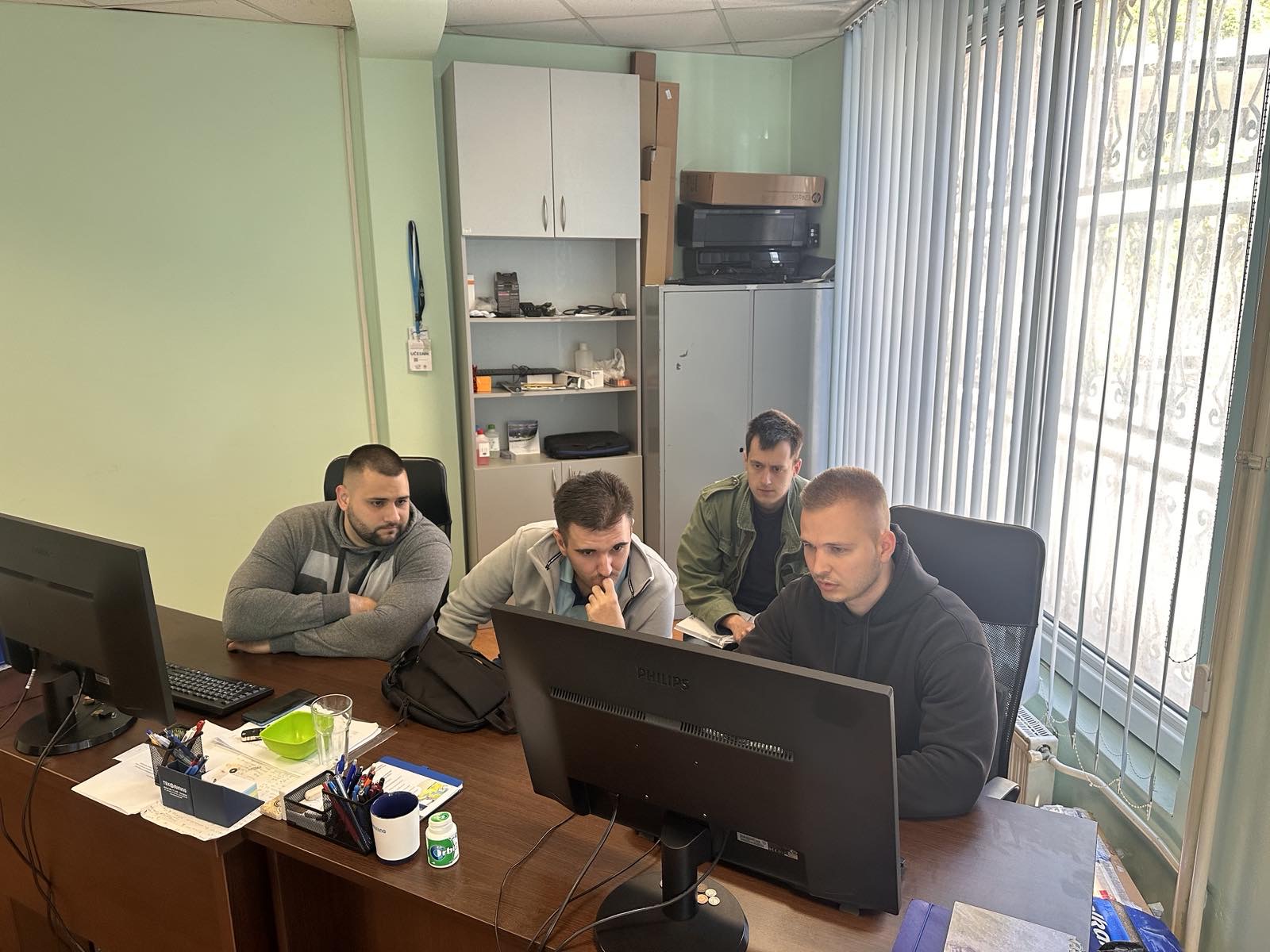
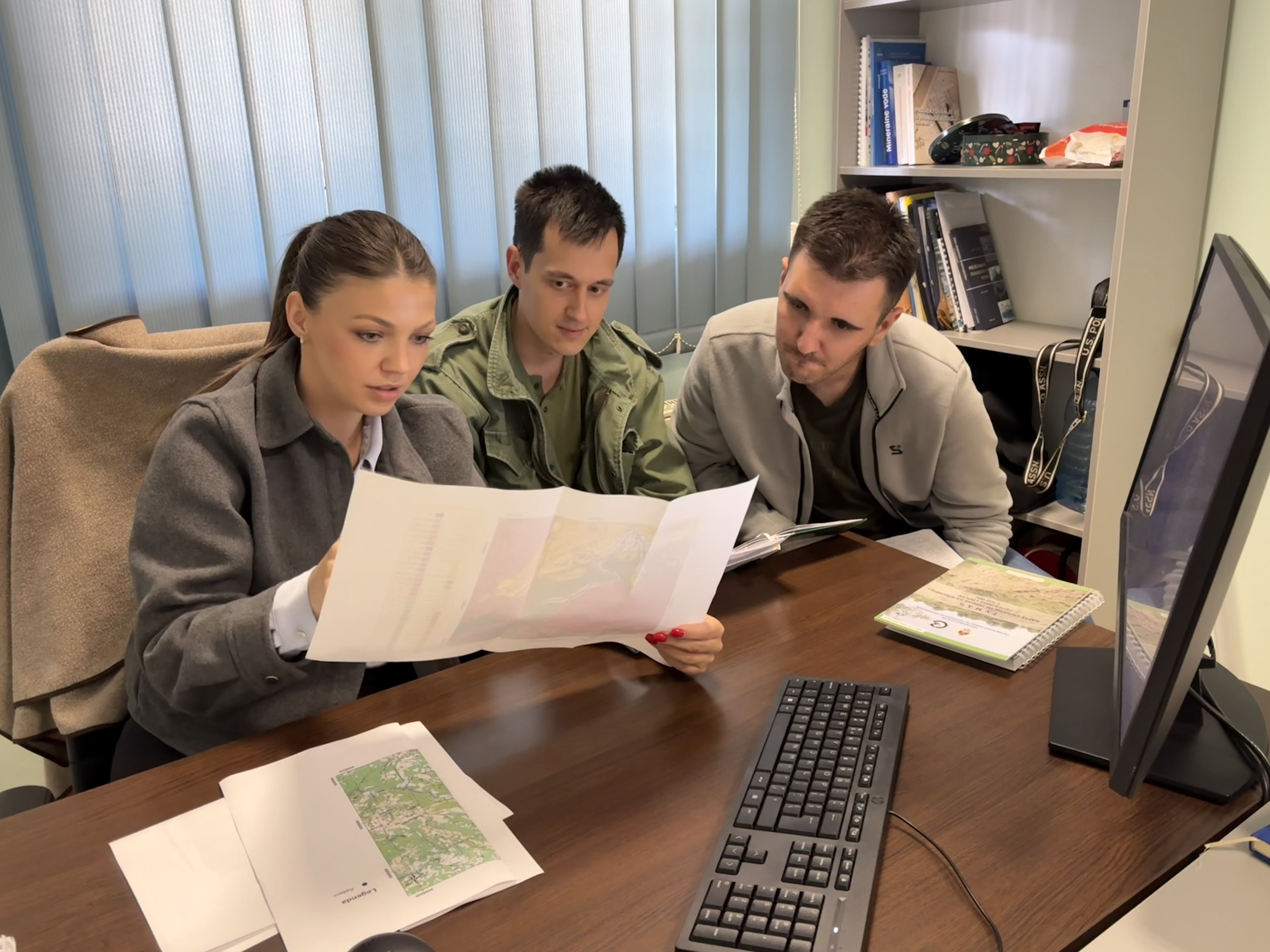
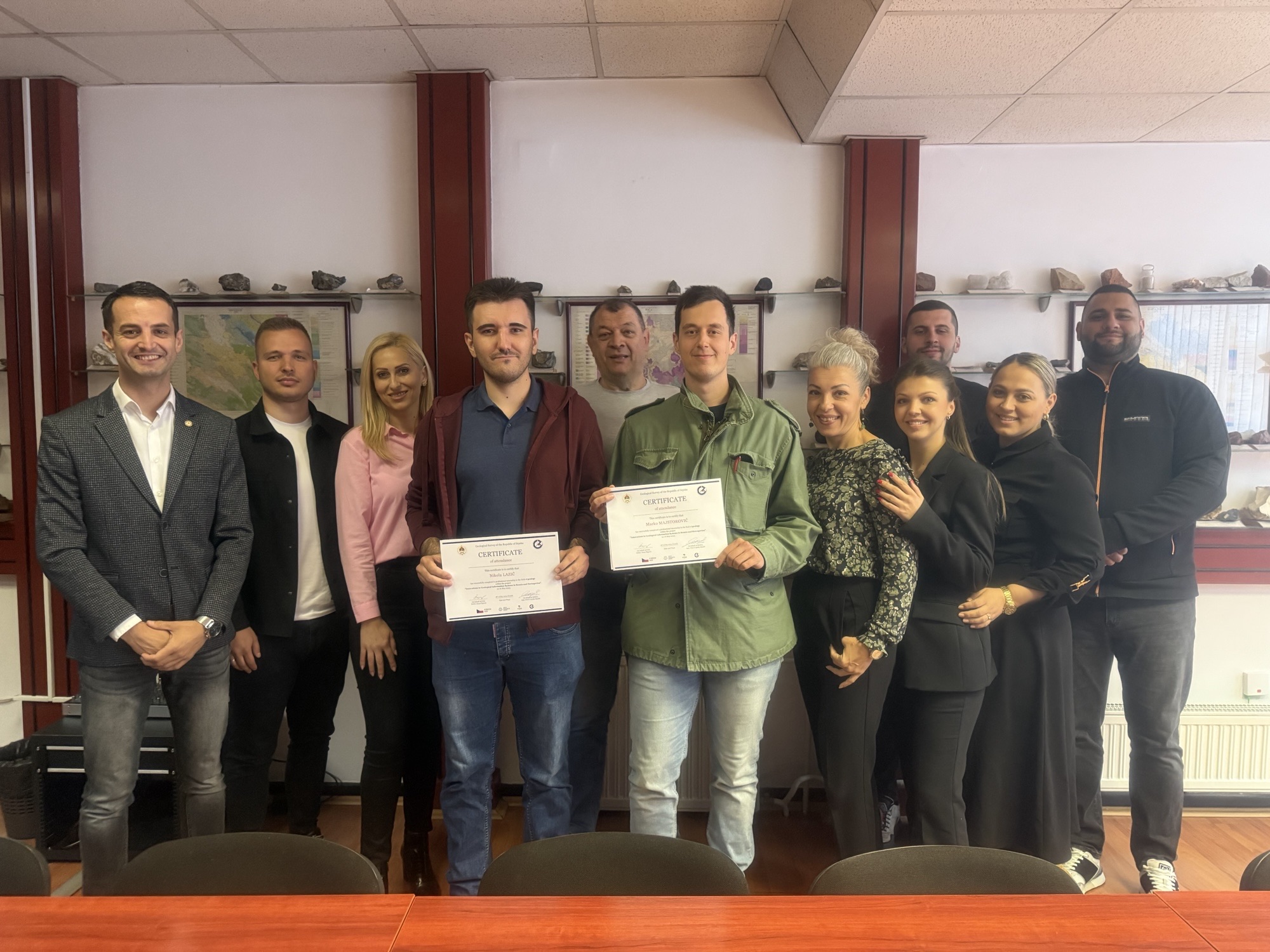
As part of the project "Innovation of Geological Information Systems in Bosnia and Herzegovina," a professional practice and training for students from the Faculty of Mining in Prijedor, University of Banja Luka, was held. The students were given the opportunity to familiarize themselves with the archive and collection of technical documentation at the Geological Institute, as well as its digitalization. They also worked on creating maps using the ArcGIS software package, where they produced key layers—geological, topographic, and situational maps—necessary for quality fieldwork.
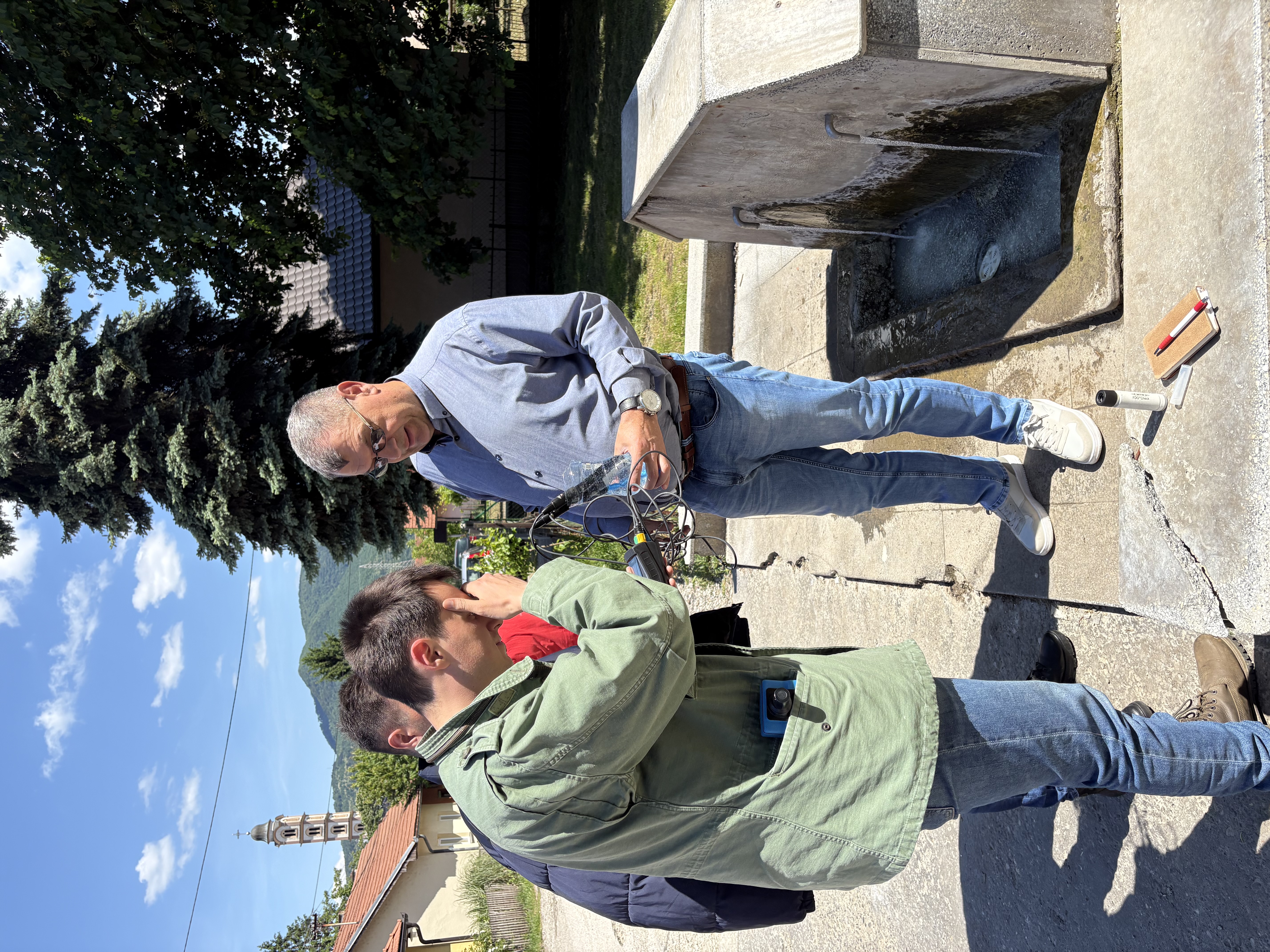
Representatives of the Geological Institute, along with the students, visited the "Vivia" water factory to gain practical knowledge and insight into the processes of water abstraction, control, and bottling of underground water. The one-day field visit included a tour of the springs and wells that are the primary part of the water collection system of the "Vivia" factory.
During their time in the field, the students had the opportunity to measure basic physicochemical parameters of water, including temperature, pH value, electrical conductivity, dissolved oxygen, and turbidity, using appropriate field equipment.
After the visit to the "Vivia" factory, the tour continued to Vitinički Kiseljak, an area where, along the small river Jaseniča, nine mineral water springs are located.
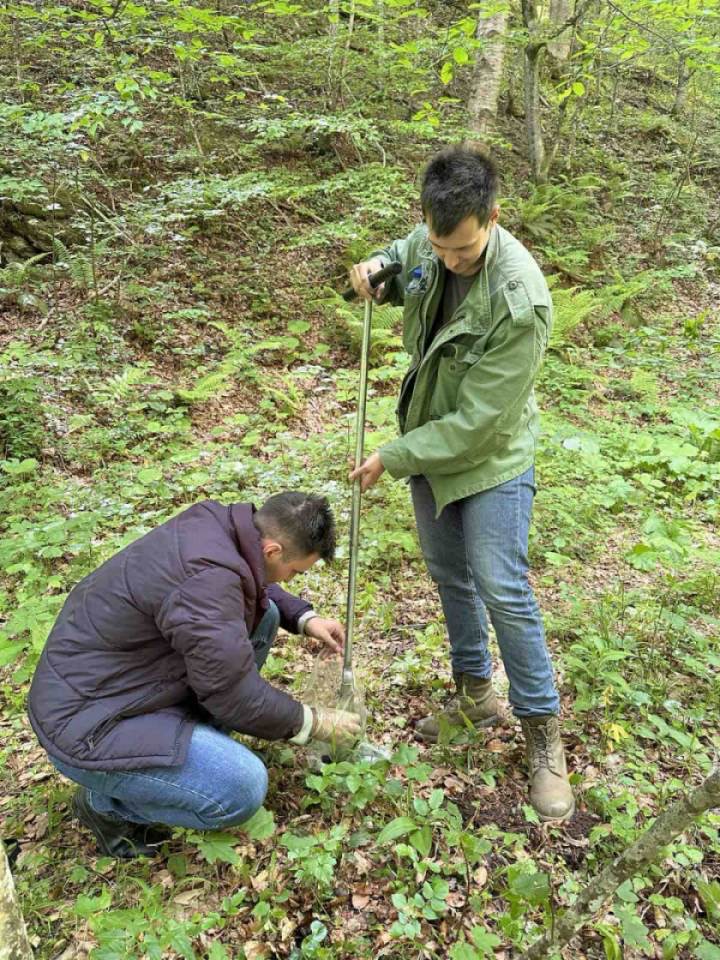
The students were also involved in the complete fieldwork day as part of the creation of the Geochemical Atlas of the Republic of Srpska, which is one of the regular activities of the Republic Geological Survey.
During the field activities, a total of 6 samples of overbank and stream sediments were collected. The students actively participated in all field activities, from determining positions in the field and collecting samples to packaging, labeling, and describing the samples. After the fieldwork, the initial office data processing followed, and they were introduced to the next steps after sample collection, which include sending the samples to the laboratory and processing the obtained results in various software packages, all in the goal of creating the Geochemical Atlas of the Republic of Srpska.
After several days of professional visits to the Republic Geological Survey, students from the Faculty of Mining in Prijedor, Marko Majstorović and Nikola Lazić, received certificates for successfully completing their professional practice.